Private Dining · 10 min read
How to Plan a Sunset Yacht Dinner in Dubai with a Private Chef
By Chef Lucian Dunn
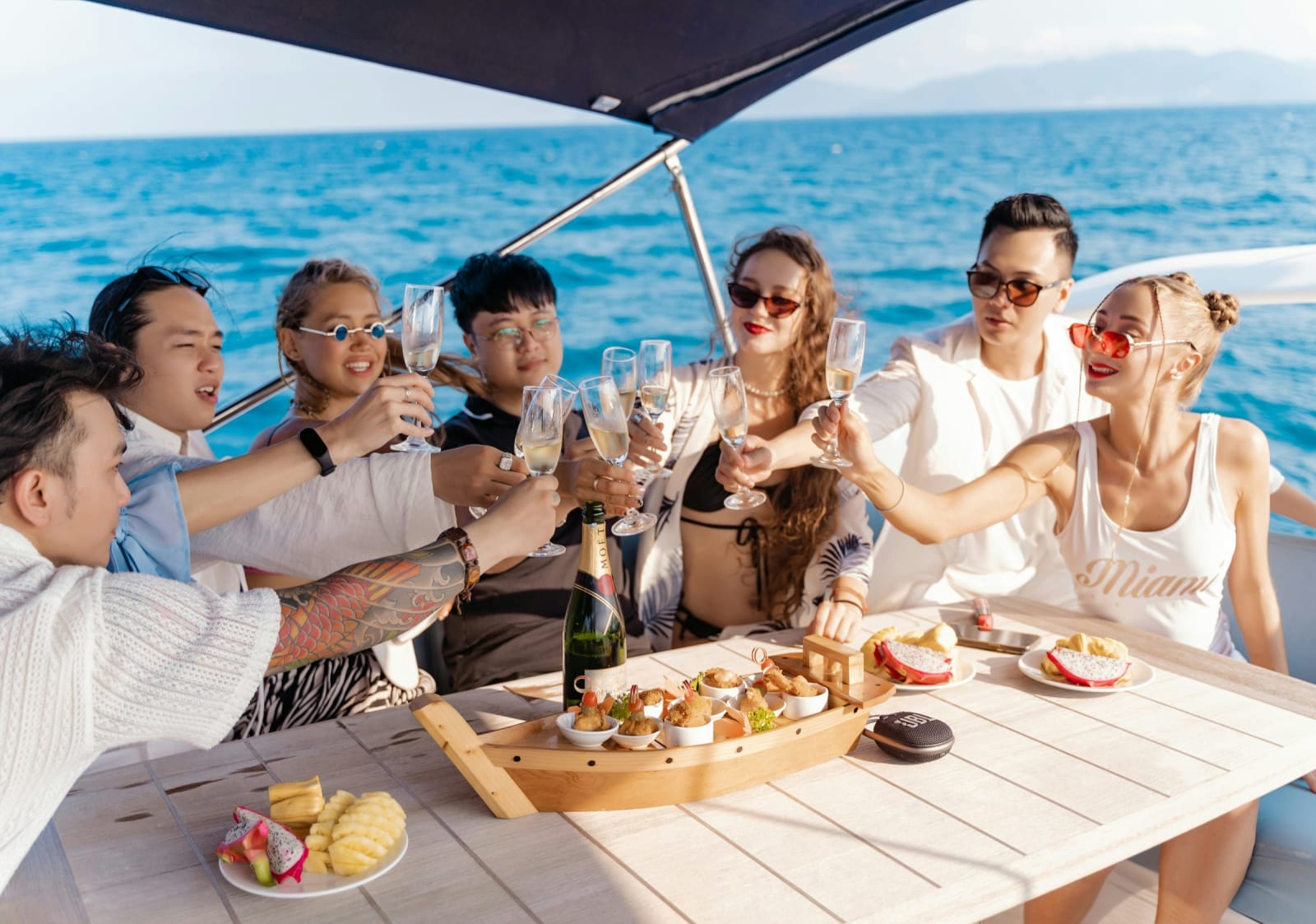
A sunset yacht dinner in Dubai is one of those evenings that looks effortless when it goes well, and that is exactly because the planning happened beforehand. Three schedules have to line up: the charter's boarding and cruising times, the chef's preparation and service, and the sun itself, which will not wait for anyone. This guide is for guests who have chartered, or are about to charter, a yacht and want a private chef to cook a proper dinner on board. It covers what to check about the boat, how to time the evening around boarding and sunset, which menus suit a galley, what to agree if the weather or the charter plans change, and how to look after your guests once you leave the marina.
What does planning a sunset yacht dinner with a private chef involve?
It comes down to coordinating the chef with the charter, so that the menu fits the boat and the courses fit the light. You book the yacht with a licensed charter company, which provides the captain and crew and is responsible for the vessel, the route and safety. The private chef is responsible for the food: designing the menu, sourcing the ingredients, preparing as much as possible before boarding, and cooking and serving the courses on board. Your job as the host is to connect the two early, share the details each side needs, and agree the timings in writing.
This matters because a charter does not automatically include a dinner. Many yachts have a galley, but having a galley is not the same as having a chef, a cooking plan or the right equipment for the menu you have in mind. When you book a chef separately, the chef and the charter team need to talk before the menu is finalised, not on the dock an hour before departure.
What needs checking before a private chef cooks on a Dubai yacht?
Before anything else, confirm that the charter company allows an outside chef to cook on board and that the galley can support the menu. Some operators have their own catering or rules about external suppliers, so ask this before you pay for the charter if you already know you want a chef. Once the answer is yes, the useful questions are practical ones about space, power and storage.
Galley size and equipment
Yacht galleys range from a full kitchen on a large motor yacht to a compact corner with a two-ring hob and a microwave on a smaller boat. Ask the charter team what is actually there: the type of hob, whether there is an oven, how much worktop space is free, and whether there is a sink with running water for washing up during service. Photos of the galley are more useful than a description, and a good chef will ask for them.
Power, gas and cold storage
Power is often the real limit on a boat. Galley appliances may run on the generator, and some yachts restrict what can be used while under way, so ask whether the hob and oven can run during the cruise and whether anything can be plugged in. Cold storage matters just as much in Dubai's climate. Find out how much fridge space is available for the chef, since drinks and the charter's own supplies often compete for it, and whether the chef should bring insulated boxes and ice packs to keep ingredients at a safe temperature.
Boat approval, access and serving space
Check where the chef can load ingredients and equipment, how early they can board, and whether the marina has rules about trolleys, parking or service access. Then look at where you will actually eat. A fixed dining table on the aft deck works very differently from a cluster of sofas on the flybridge, and the distance between the galley and the table affects how hot food reaches your guests. Agree with the captain where plates will be passed and where the chef can work without being in the crew's way.
At LUCIAN, the galley, refrigeration, power and deck layout are confirmed with the captain or charter team before the menu is final, so the food is planned around what the boat can really do. You can read more about how this works on the yacht dining in Dubai page.
How do you time a yacht dinner around boarding and sunset?
Work backwards from sunset. Find the sunset time for your date, decide where you want to be on the water when it happens, and then set the boarding time and the order of courses from there. In Dubai the sun sets at around 5:30pm in the winter months and after 7pm in midsummer, so the same plan can shift by well over an hour depending on when you book. Always check the exact time for your date rather than relying on a general figure.
A sample timeline for a sunset charter
As an illustration only, a typical evening for a three or four-hour charter might run like this, with every time agreed with the charter team for your specific date:
- — Around an hour before guests arrive: the chef loads ingredients and equipment, and finishes the preparation dockside.
- — Boarding: guests arrive 15 to 20 minutes before departure, so a late taxi does not eat into the cruise.
- — Departure and first hour: welcome drinks and canapés while the yacht heads out past the skyline.
- — Sunset: the yacht slows or anchors at a good viewpoint, and the table is ready just before the light changes.
- — After sunset: the main courses are served at anchor, when the boat is steady and guests are seated.
- — Return: dessert and coffee on the way back, with the city lit up behind you.
Serving the main course at anchor rather than under way is worth asking for. Plates, glasses and hot pans are all easier to manage on a steady boat, and guests enjoy the food more when they are not bracing against the movement. It also gives the chef a predictable window for the most demanding part of the service.
How long should the charter be?
For a sit-down dinner with a chef, a longer charter is usually more comfortable than a short sunset cruise. A 90-minute slot leaves little time for more than canapés and one course, while three to four hours allows a relaxed meal with proper gaps between courses. If budget limits the hours, it is better to simplify the menu than to rush a long one.
Which menus work best on a yacht?
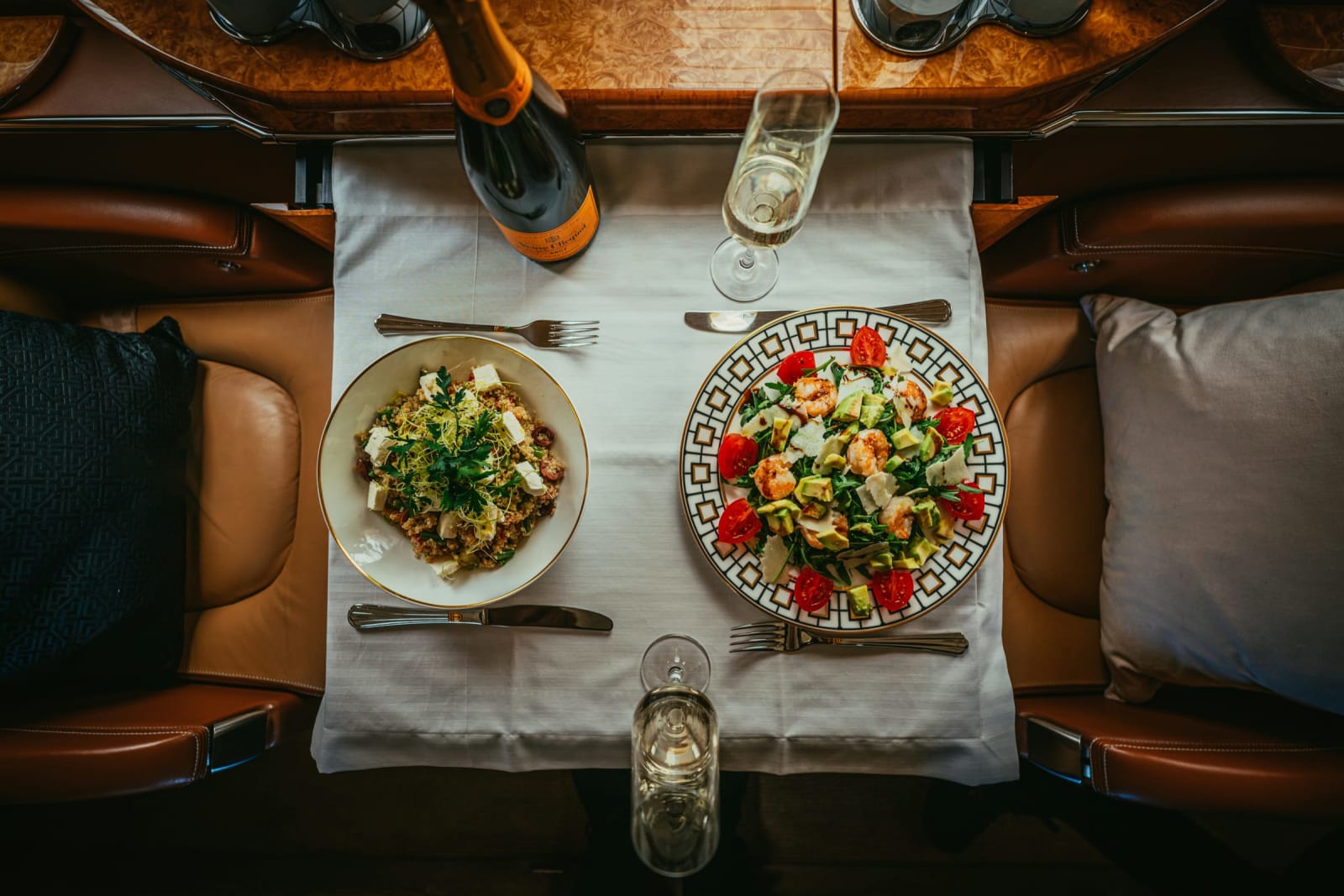
The best yacht menus lean on dishes that are prepared before boarding and finished simply on board. Cold and room-temperature courses, such as crudo, salads, chilled soups and terrines, travel well and look beautiful on deck. Hot courses work best when there are only one or two of them and they need little more than searing, reheating gently or finishing in a pan, rather than long cooking in a small galley.
Think about how each dish behaves on a moving boat. Food that is easy to eat with a fork, plates that are not filled to the edge, and sauces served in a way that will not slide around all make the evening easier. Sharing platters can suit a relaxed group of friends, while plated courses feel more special for an anniversary or a proposal. Very delicate techniques, towering presentations and anything that needs a hot oven for a long time are usually better kept for a dinner at home.
The heat matters too. On a warm evening, especially from May to October, a chef will plan around keeping cold food properly chilled and avoid dishes that wilt or melt quickly in the open air. In the cooler months the evening breeze on the water can be surprisingly fresh, so warmer dishes and a hot drink after dessert are welcome.
What happens to a chef-led yacht dinner if the charter plans change?
The captain always has the final say on whether and where the yacht sails, so the most useful thing you can do is agree in advance what happens if the plan changes. Strong winds, poor visibility or rough sea can lead the charter company to shorten the route, keep the boat in calmer water or postpone the trip altogether. The National Center of Meteorology publishes marine forecasts and weather warnings for the UAE, and it is worth checking them in the days before your charter.
Because the chef and the charter are usually booked separately, their terms can be different. Before you confirm either booking, ask each one:
- — What happens if the charter is cancelled or postponed because of weather, and how much notice they will give.
- — Whether the dinner can move to another date, and what costs apply if the ingredients have already been bought.
- — Whether the dinner could go ahead in another setting, such as moored in the marina or at your home or villa, if the boat cannot sail.
- — Who tells whom: make sure the charter company has the chef's contact details, or that you will pass on any change immediately.
Having these answers written down means a change of plan becomes a decision rather than a scramble. It also protects the parts of the evening that cannot be recovered, such as fresh fish bought that morning.
How do you handle guests' dietary needs on a boat?
Share every allergy and dietary requirement when you first enquire, exactly as you would for a dinner at home, but with extra care. On a yacht you are away from shops and, for part of the evening, away from shore, so there is no quick fix if a guest cannot eat a dish. A chef can design the whole menu around halal, vegetarian, vegan, gluten-free or allergy needs from the start, but a compact galley also makes it harder to keep ingredients completely separate, so serious allergies should be discussed in detail. Our guide on how private chefs handle food allergies and dietary restrictions explains the questions to ask.
Seasickness is worth a thought as well. Guests who are prone to it usually feel better eating lighter food, staying on deck in the fresh air and avoiding a heavy meal before boarding. A menu that starts light and builds gently suits most groups on the water.
What else should you agree with the chef and the charter?
A few details are easy to miss because each side assumes the other has them covered. It helps to settle them when you confirm both bookings.
- — Drinks: who supplies them, who serves them, and whether the charter has its own rules about bringing drinks on board.
- — Tableware: whether the yacht provides plates, glasses and cutlery for your full guest count, or whether the chef needs to bring them.
- — Service: whether the chef will serve alone or whether the charter's crew will help carry plates, and whether extra service staff are needed for a larger group.
- — Rubbish and washing up: where waste goes during the trip and how the galley is left at the end.
- — Special moments: a birthday cake, a proposal or a speech should be timed with both the chef and the captain, so the yacht is in the right place and dessert arrives at the right moment.
If you are planning a celebration, tell both sides what the occasion is. It changes how the evening is paced, and it lets the captain choose a spot and a moment that make the most of the view.
How much should you budget for a sunset yacht dinner?
Budget for two separate costs: the yacht charter, which you pay to the charter company, and the private chef, which covers the menu, ingredients, cooking and service. At LUCIAN, private dining starts from AED 450 per person, and yacht dinners start from AED 500 per person because each boat and route involves extra planning. Our guide to how much a private chef costs for a yacht dinner in Dubai explains which costs belong to the chef and which to the charter, what a quote usually includes and which extras can change the total.
Planning your sunset yacht dinner with LUCIAN
If you have a charter booked, or a date in mind, send an enquiry with the date, the marina, the yacht or charter company if you know it, the number of guests, the occasion and any dietary needs. Lucian will confirm the galley details with the charter team, suggest a menu that suits the boat and the timing, and send a clear quote before anything is confirmed. All you need to do on the evening is step on board and watch the sun go down. For occasions on land, see the private chef in Dubai page.